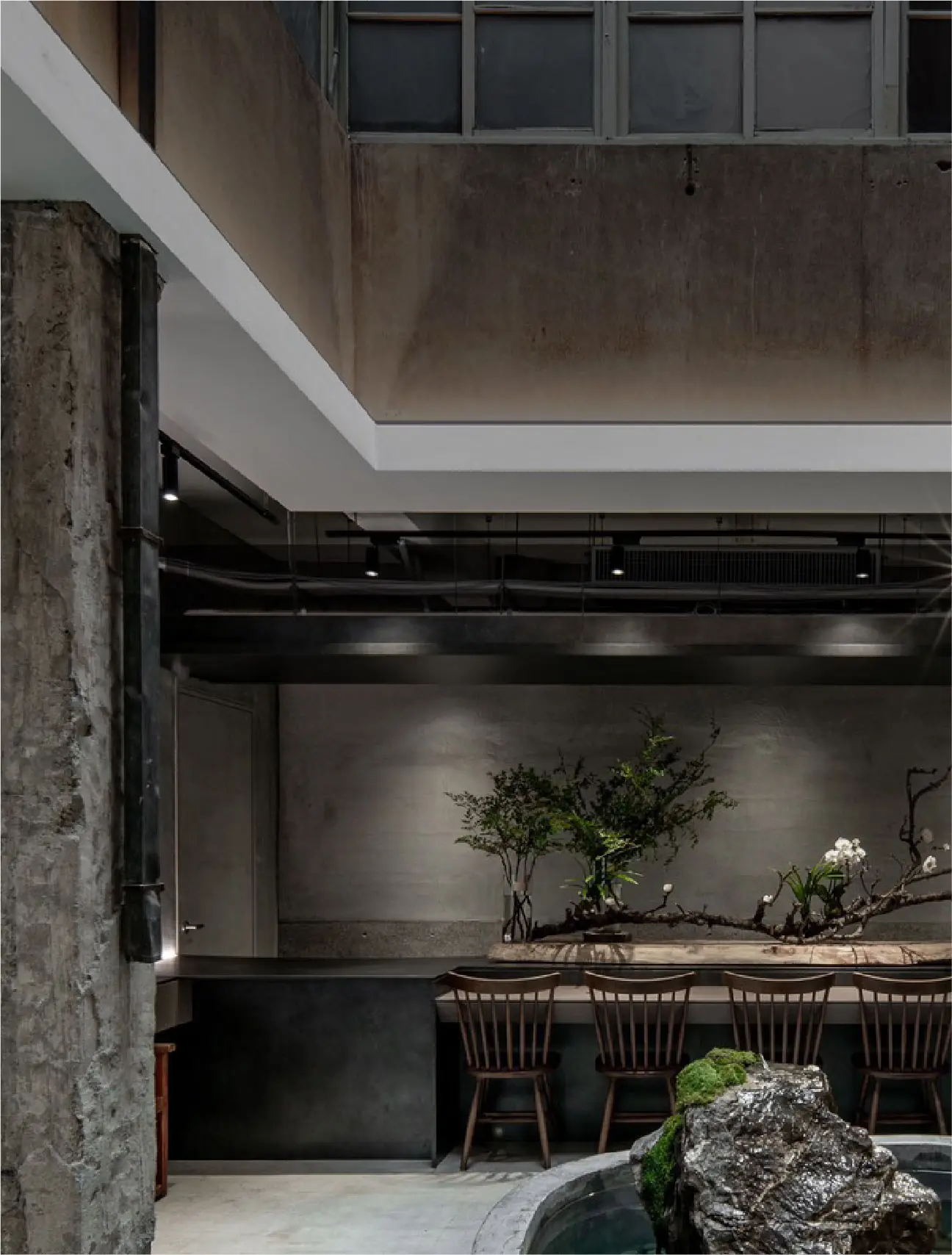
This is a breathing architecture.
Breaking away from the traditional stand-alone building model, the design separates the volumes to allow light, shadow, wind, and greenery to flow freely through the spaces. Nestled within the mountains of Daken, the site draws inspiration from seasonal colors, shifting climates, and winding paths, allowing the architecture to merge seamlessly with its environment.
The entrance sequence is marked by a golden, tree-lined avenue symbolizing the concept of “crossing to the other shore” from the Lamrim Chenmo. Framed by a guiding wall, the procession gradually quiets the mind and prepares visitors for contemplation. Semi-outdoor corridors, atrium spaces, preserved camphor trees, and an enclosed plaza collectively create a serene and focused atmosphere for spiritual practice. Framed views and layered greenery around the main hall evoke a pictorial Buddhist setting.