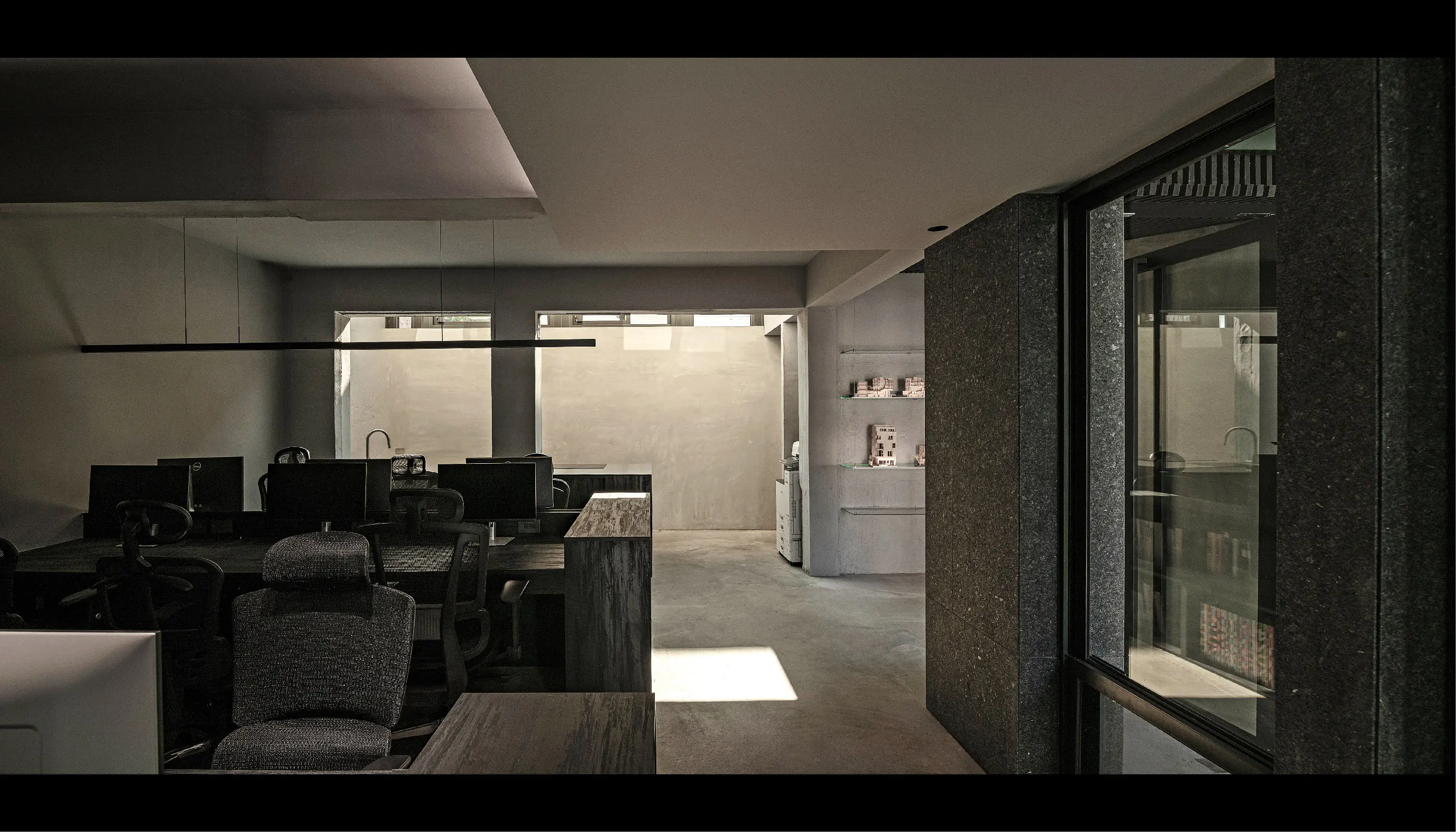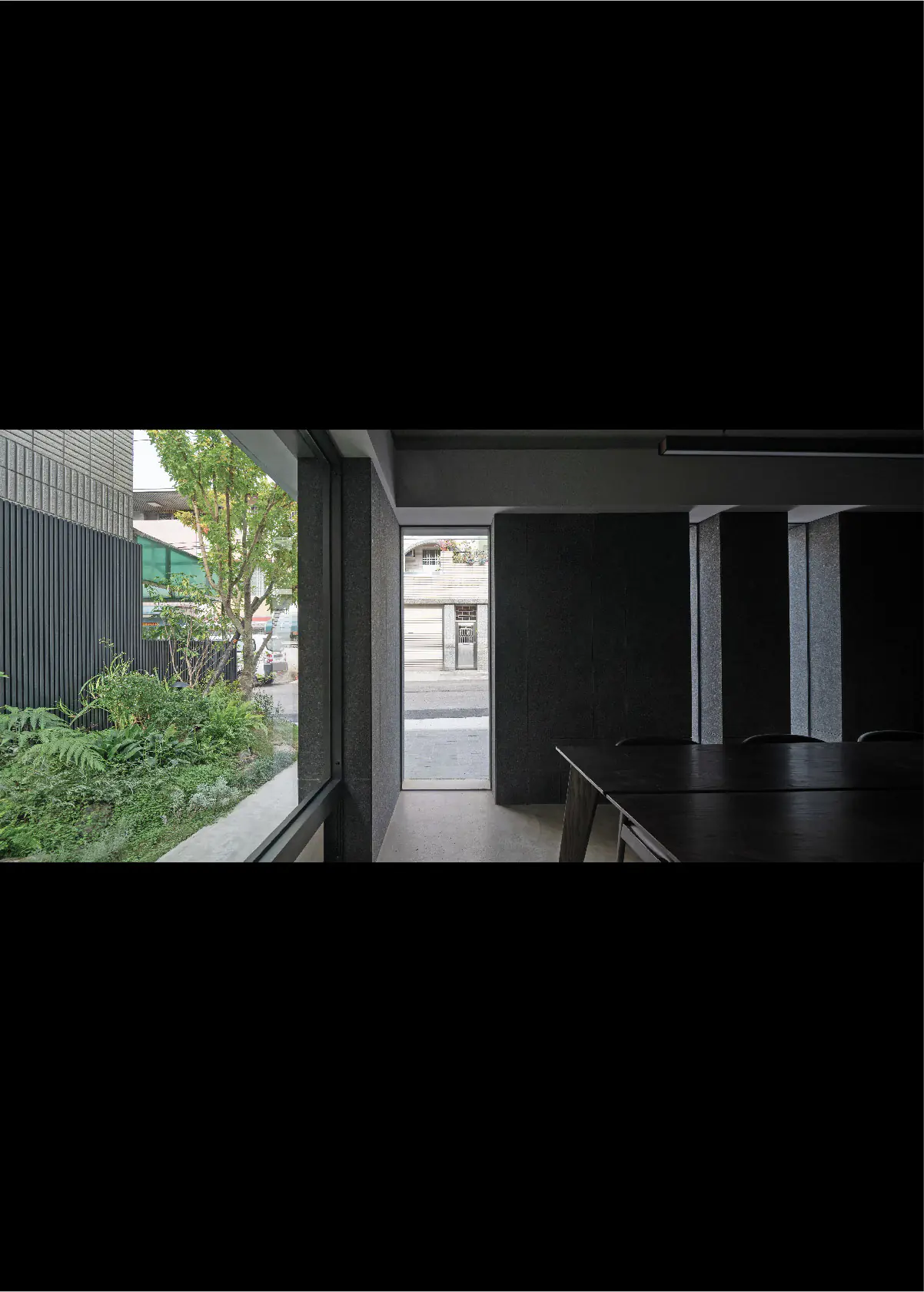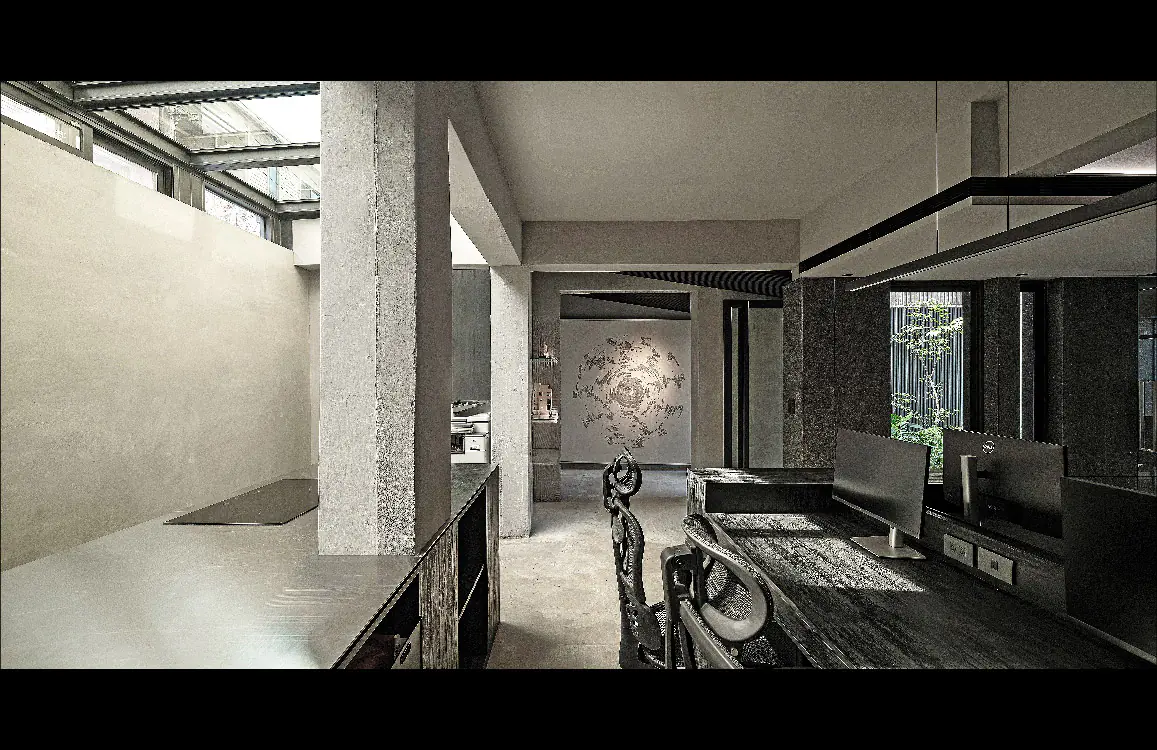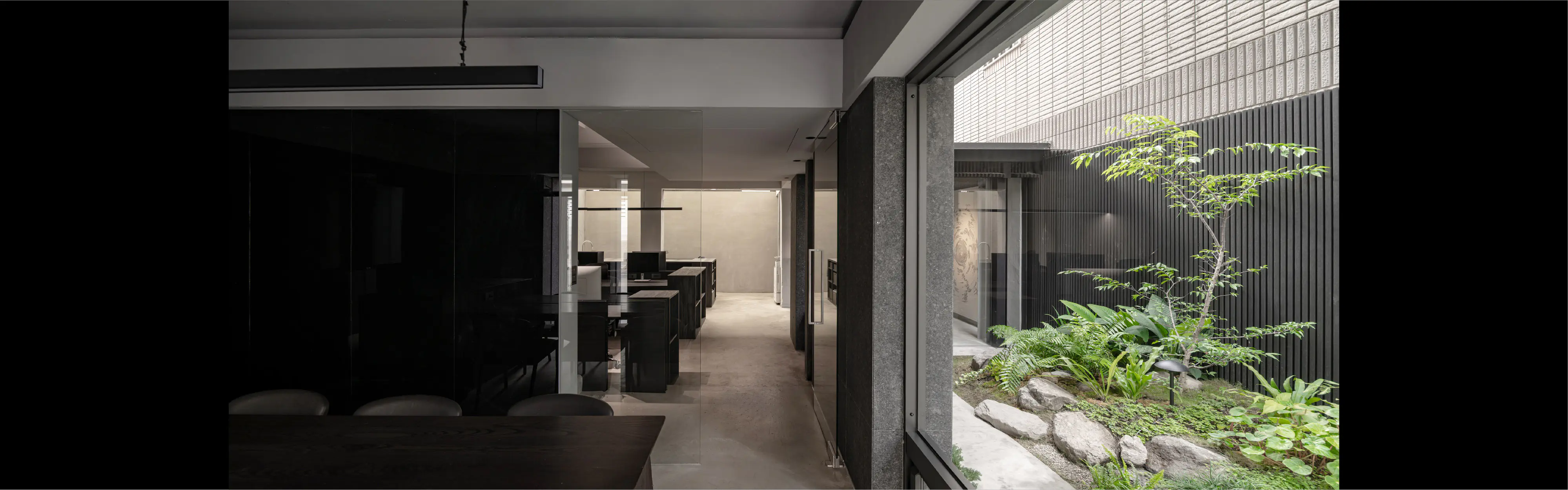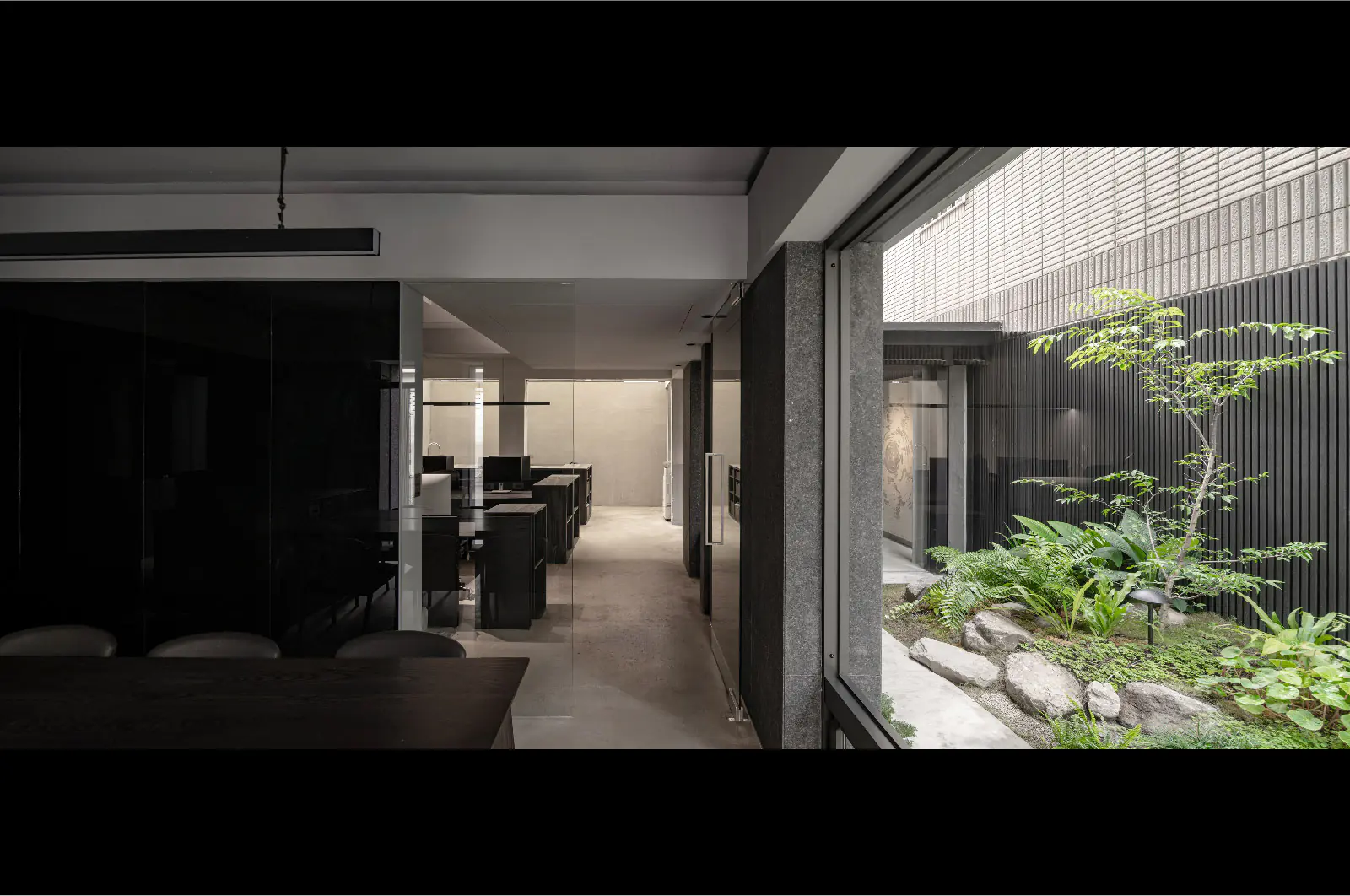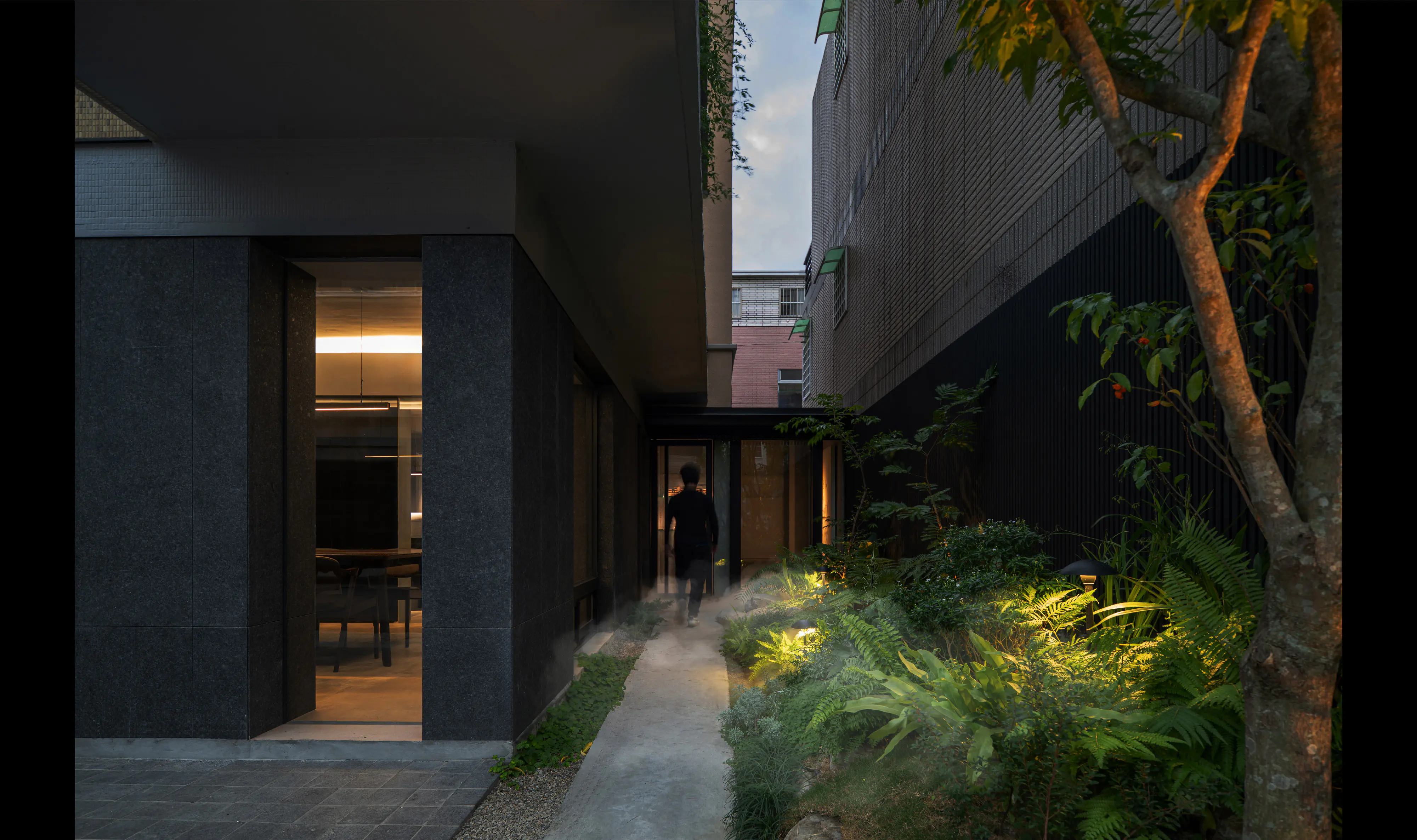
本案位於住宅區之中,作為根果設計的事務所空間,設計試圖在辦公機能與居住環境之間建立一種更溫和的關係。在延續老屋原有架構的前提下,我們尋求新與舊之間的平衡,同時回應鄰里尺度與街道氛圍,使空間既能維持工作的專注,也能融入日常社區生活之中。
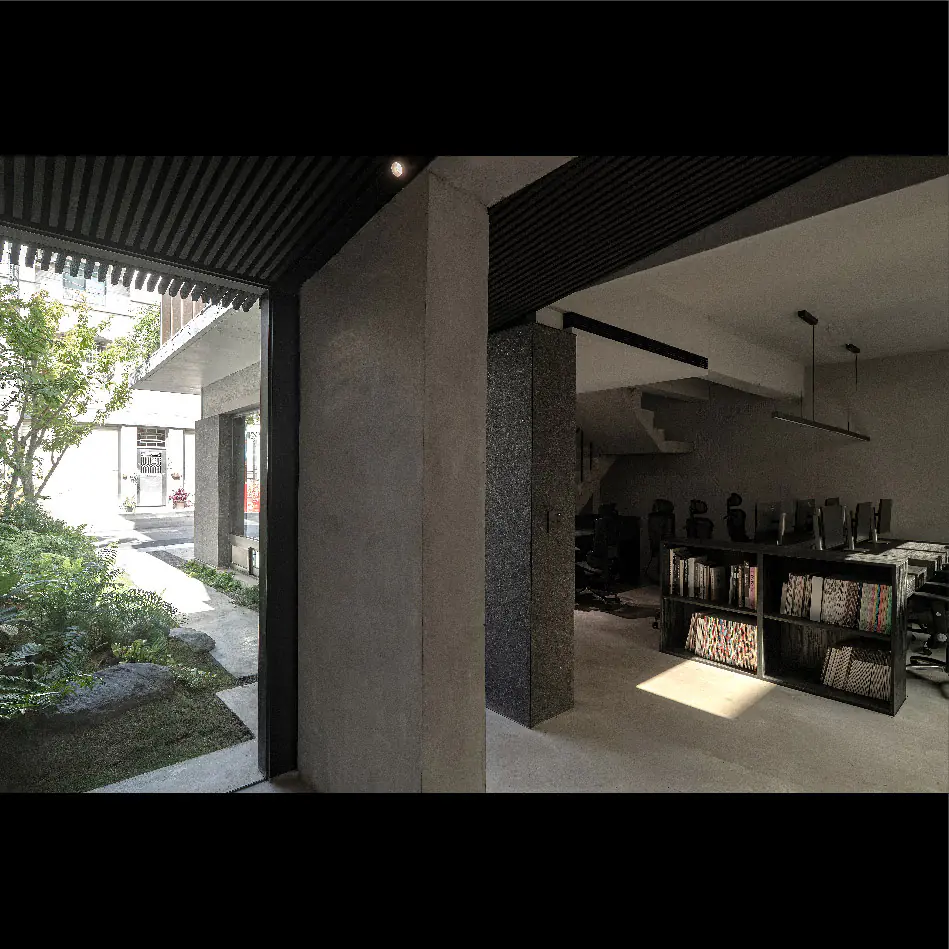
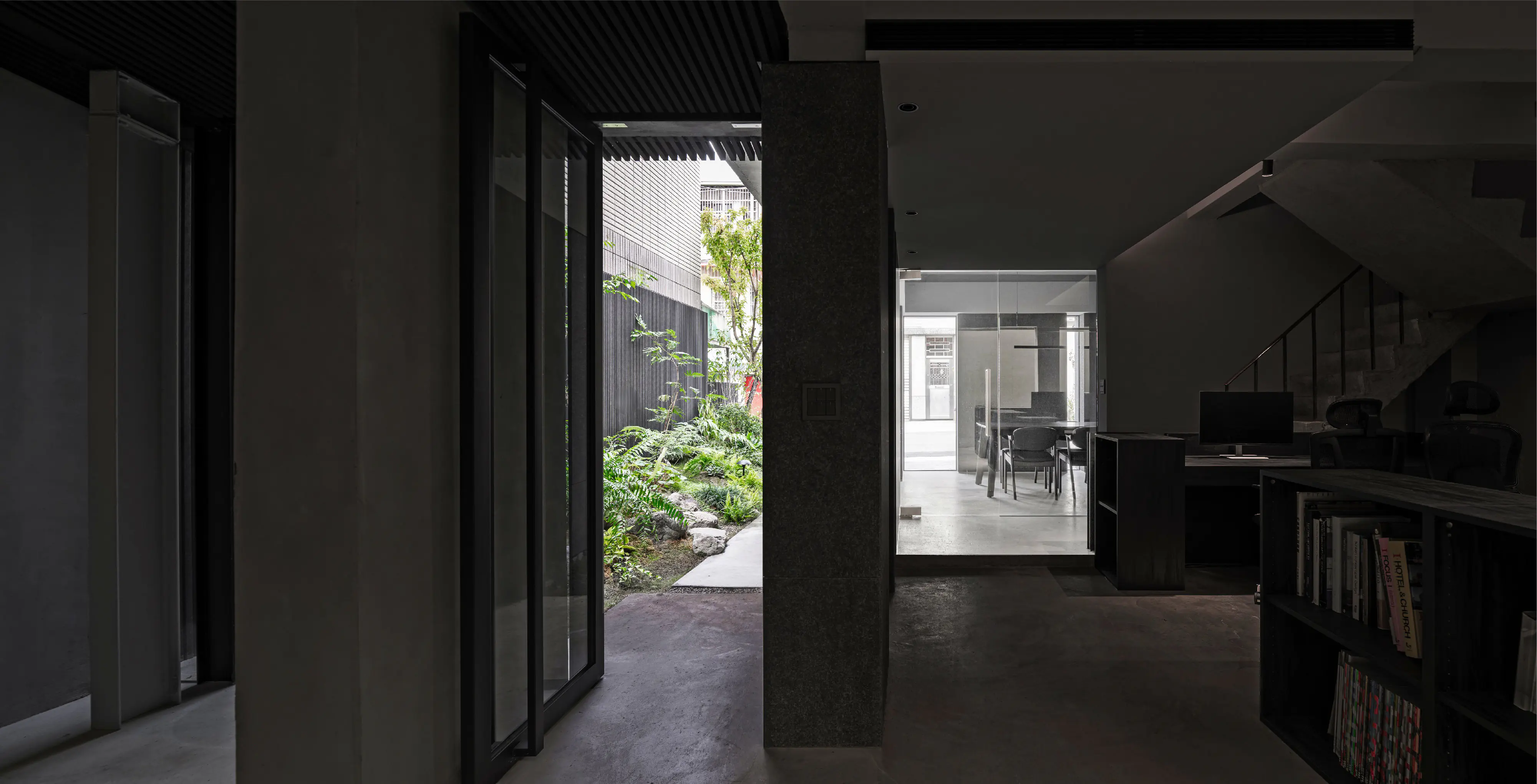
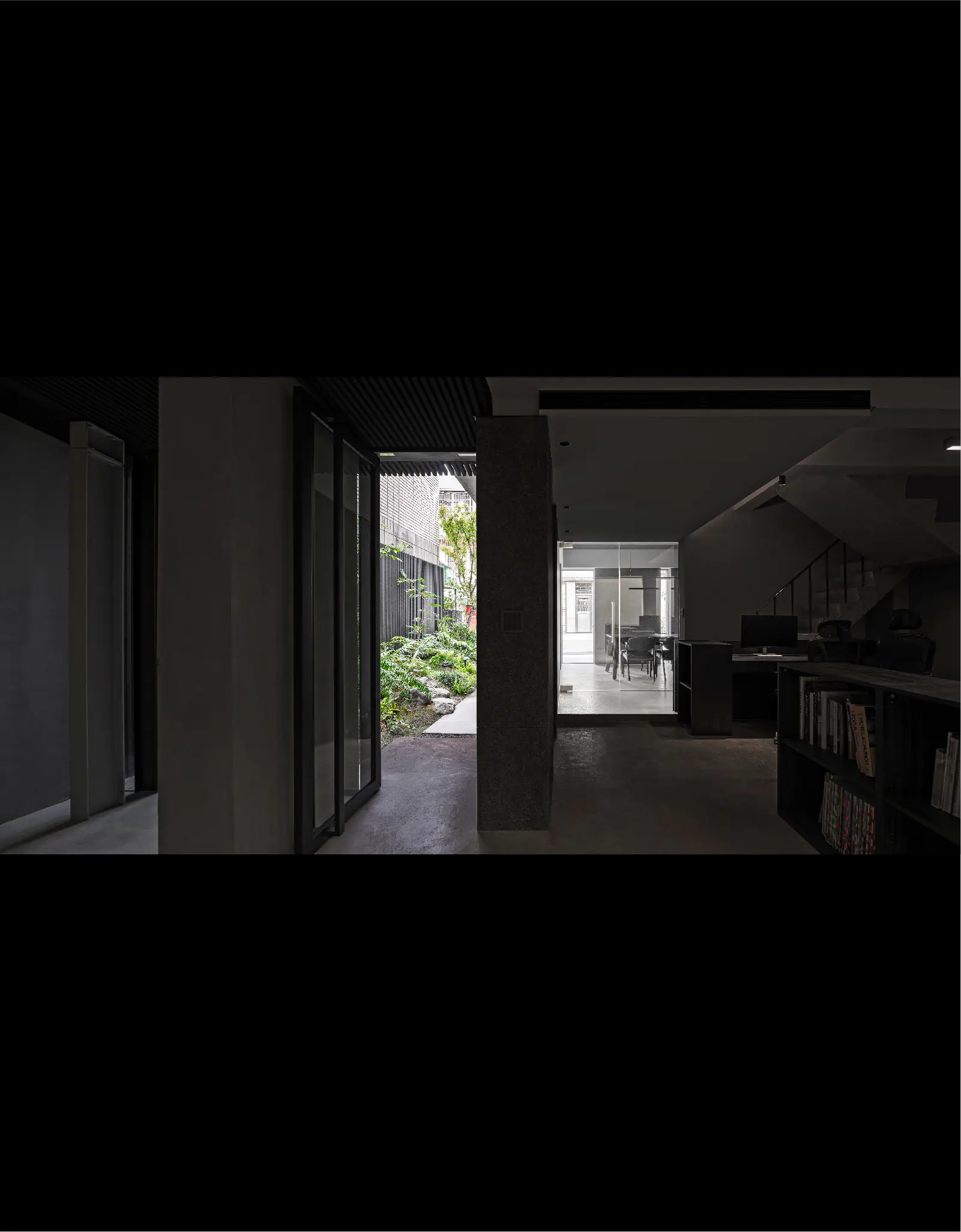
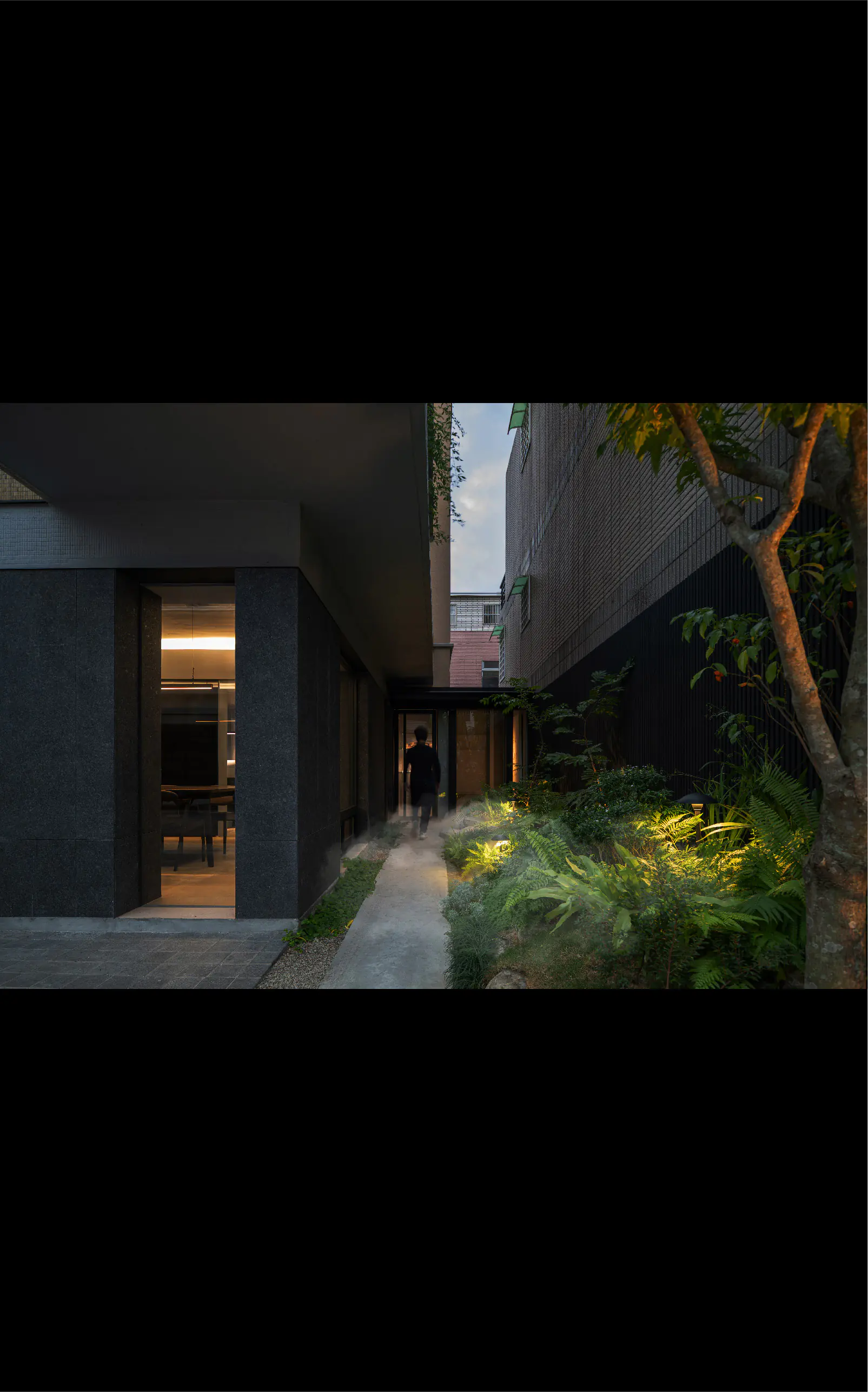
原有建築格局相對封閉,因此設計首先從打開空間開始。拆除既有的圍牆與牌樓後,原本被包覆的內院被重新釋放,轉化為沿街開放的景觀庭院。景觀與入口因此得以回應街道與鄰里關係,也讓行經此處的人能夠自然地感受庭院與空間的存在。
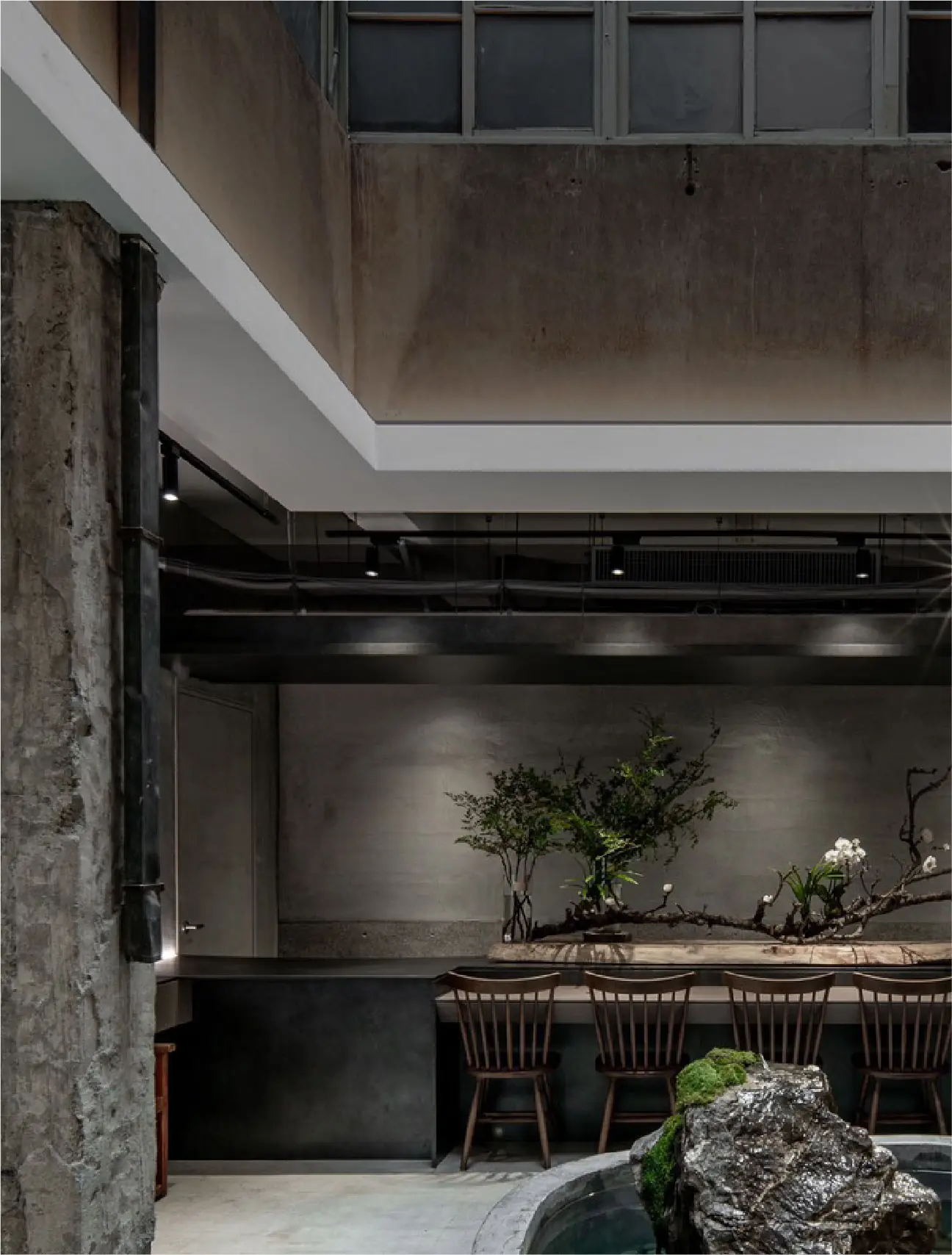
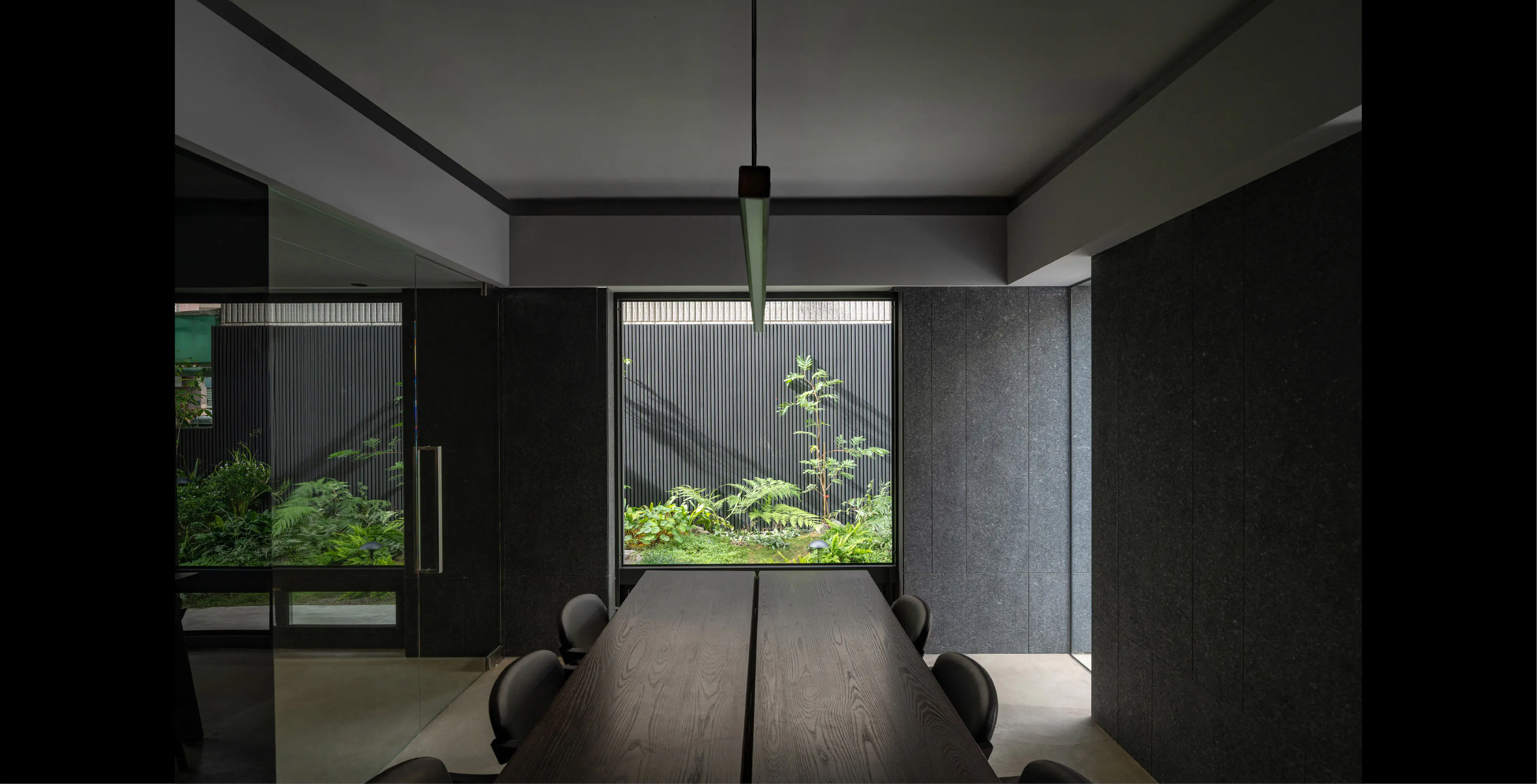
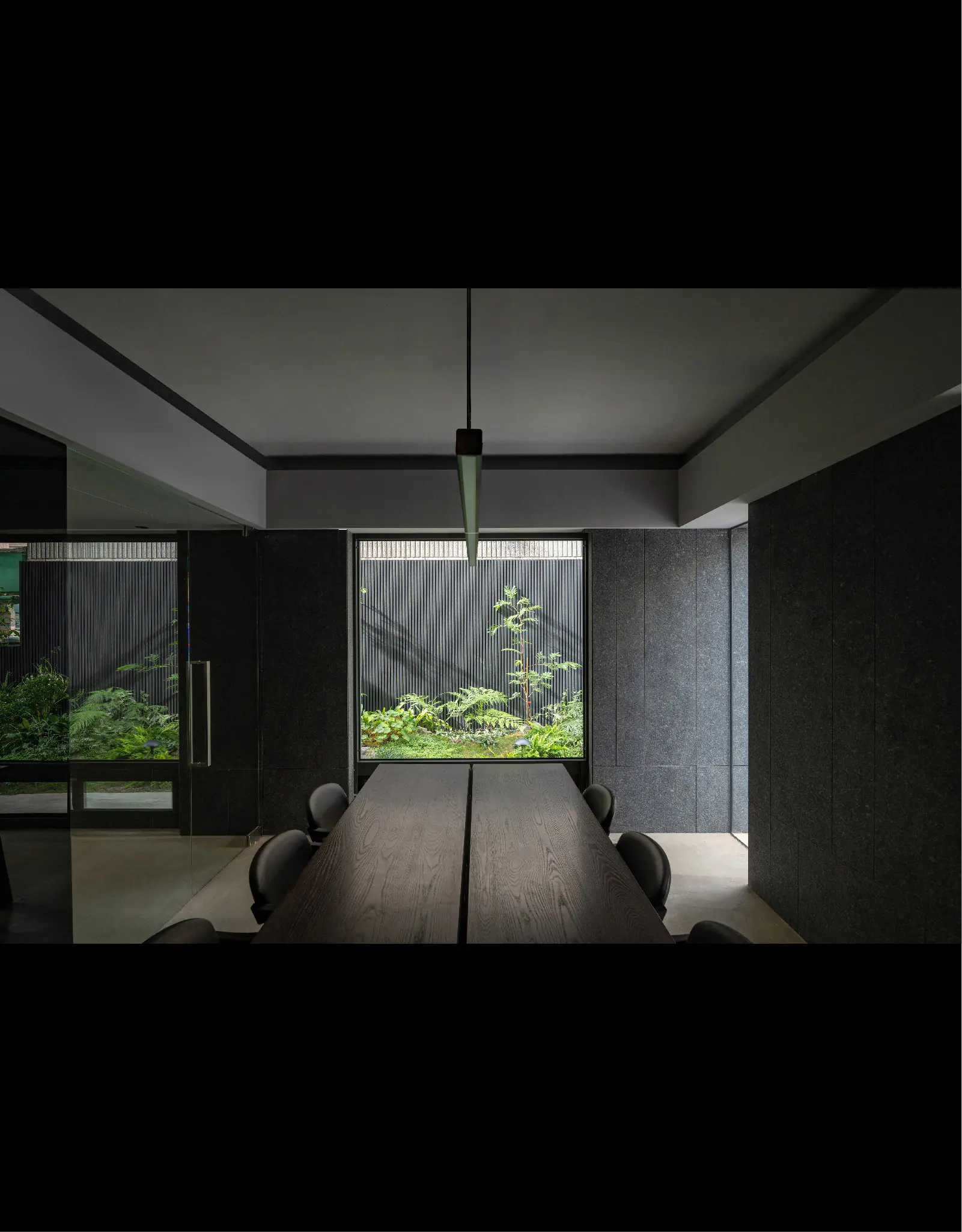
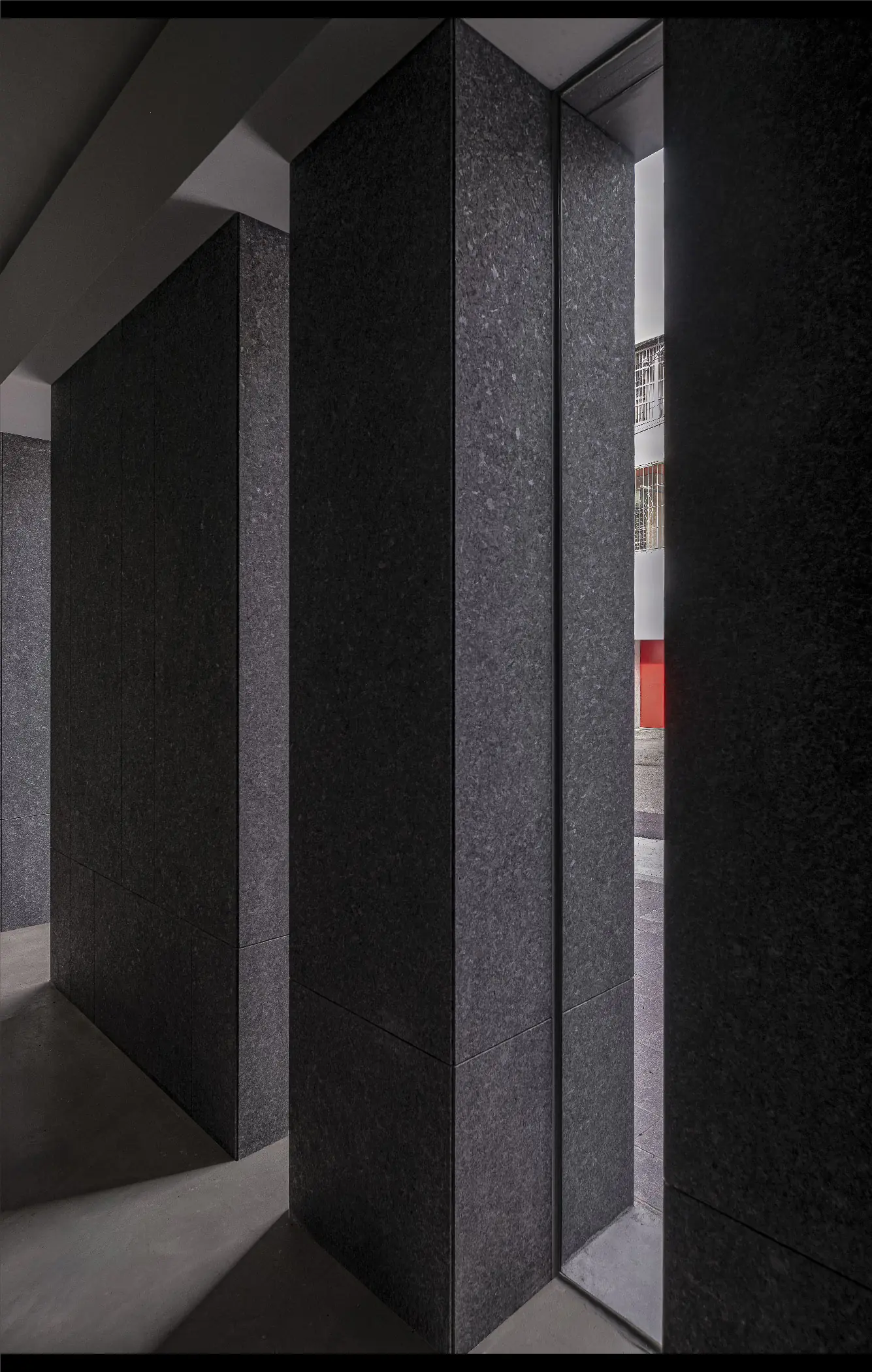
深色量體、結構柱列與植栽景觀共同構成空間的基本層次,使室內外之間形成柔和的過渡。庭院不僅作為景觀存在,也成為工作空間與街道之間的緩衝場域,讓人們在進入建築之前,便已逐漸從城市的節奏轉換至較為沉靜的狀態。
Located within a residential neighborhood, the project serves as the office of Oriphase Design. The design seeks to establish a gentle balance between the functional needs of a workplace and the atmosphere of its surrounding residential context. Working within the framework of the existing house, the intervention explores a dialogue between old and new while responding to the scale of the neighborhood and the rhythm of the street, allowing the workspace to remain focused while still engaging with everyday community life.
The original layout of the house was relatively enclosed. The design therefore begins by opening up the spatial structure. By removing the existing boundary wall and gate, the previously enclosed courtyard is released and transformed into an outdoor garden facing the street. This gesture allows the landscape and entrance to reconnect with the surrounding neighborhood, inviting passersby to naturally engage with the courtyard and the spatial atmosphere of the building.
Dark-toned volumes, structural columns, and planted landscapes together form the fundamental layers of the space, creating a soft transition between interior and exterior. The courtyard functions not only as a landscape element, but also as a buffer between the workplace and the street, gradually shifting the rhythm from the city outside to a quieter and more contemplative atmosphere within.
面積/
70 坪
項目狀態/
建成
竣工時間/
2025
地址/
台中市
項目周期/
2021
項目周期/
2021
靜院迴廊
Quiet Courtyard Cloister
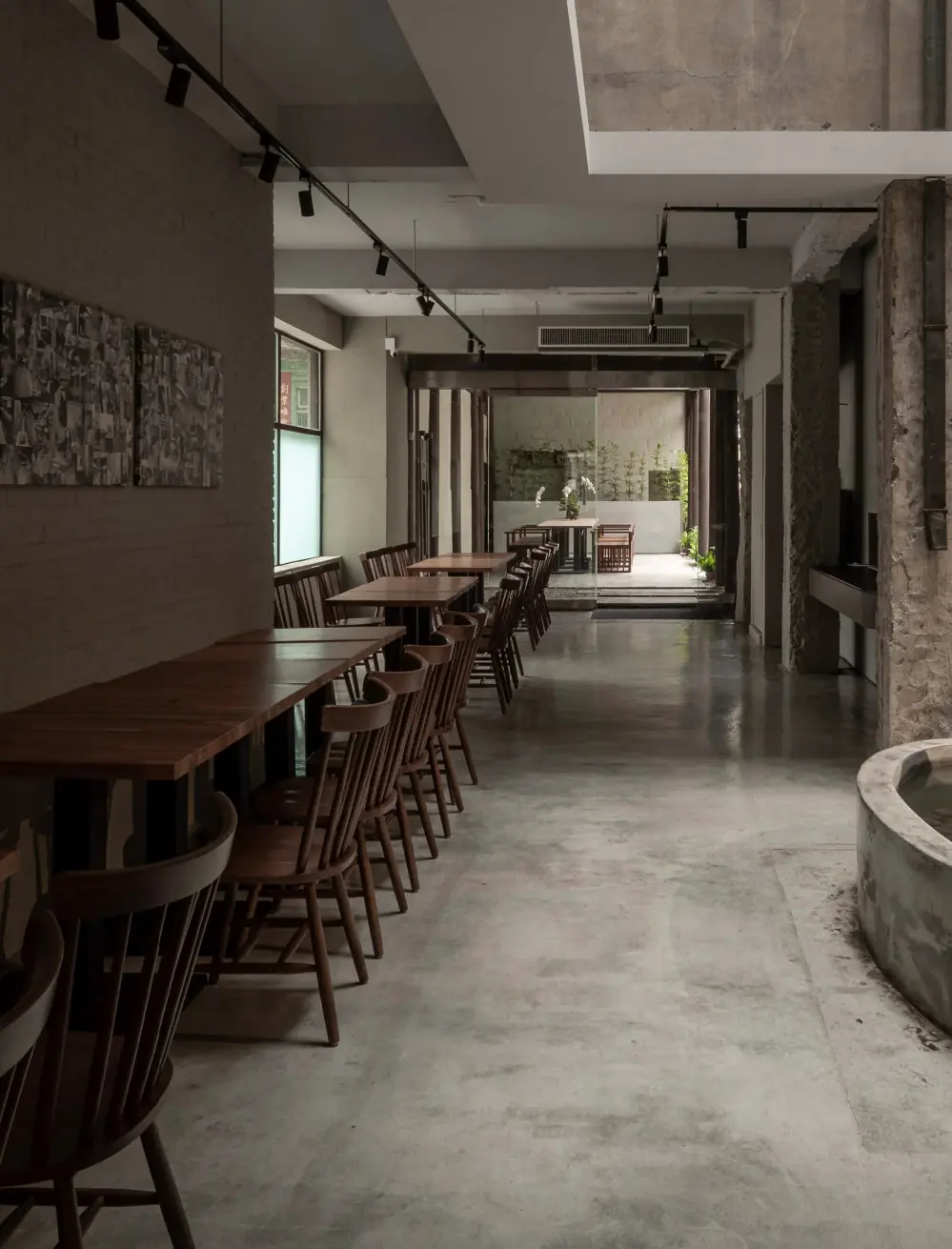
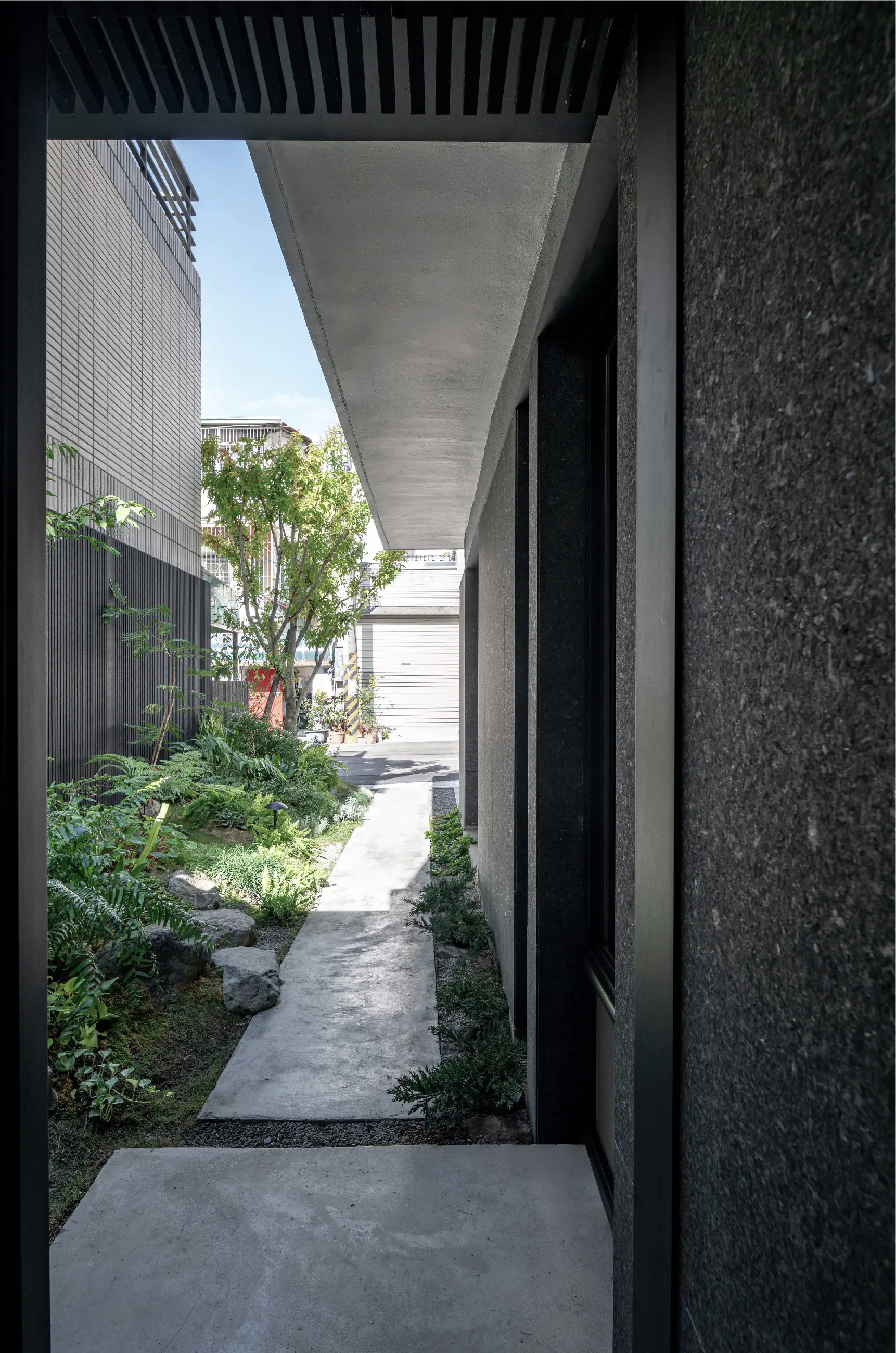
在空間動線上,設計透過拉長進入建築的路徑,形成一條沿院而行的迴廊式動線。人們從明亮的戶外庭院進入一段較為收束的走道,在光線與空間尺度的轉換之間,步調逐漸放慢,情緒也隨之沉靜。原有結構牆體被保留下來,成為明暗轉換的重要界面,使行進中的空間層次得以逐步展開。
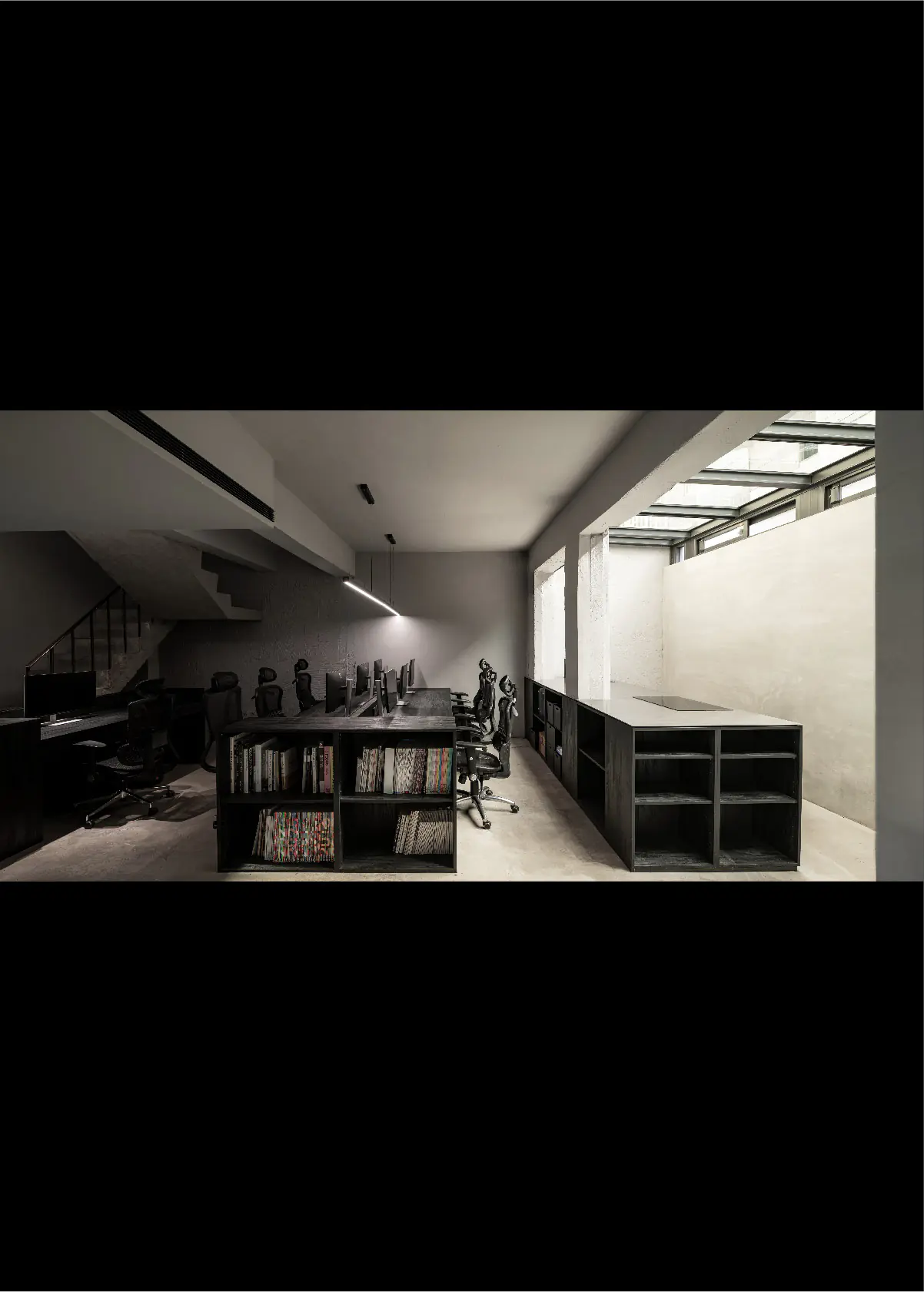
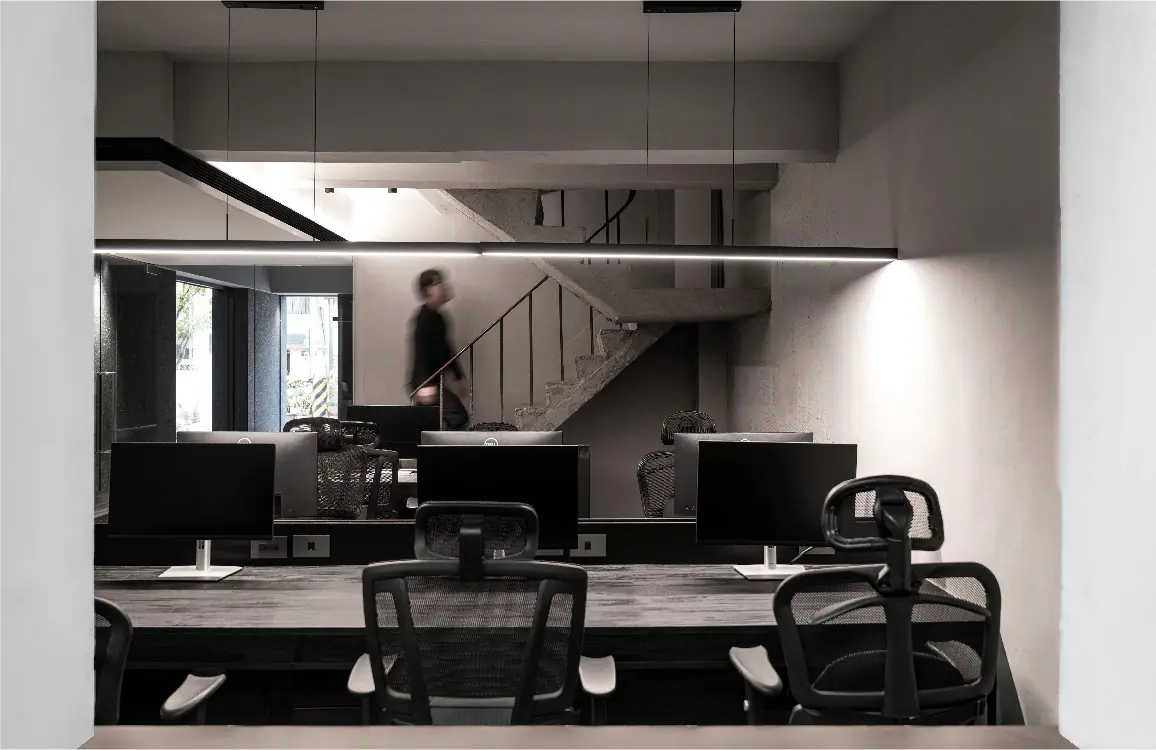
柱列、陰影與天光共同塑造了迴廊的空間節奏,使視線、動線與自然端景在行走之中逐漸展開。透過回字形的動線安排,不僅強化了室內各空間之間的連續關係,也為未來人員的彈性擴充保留可能。
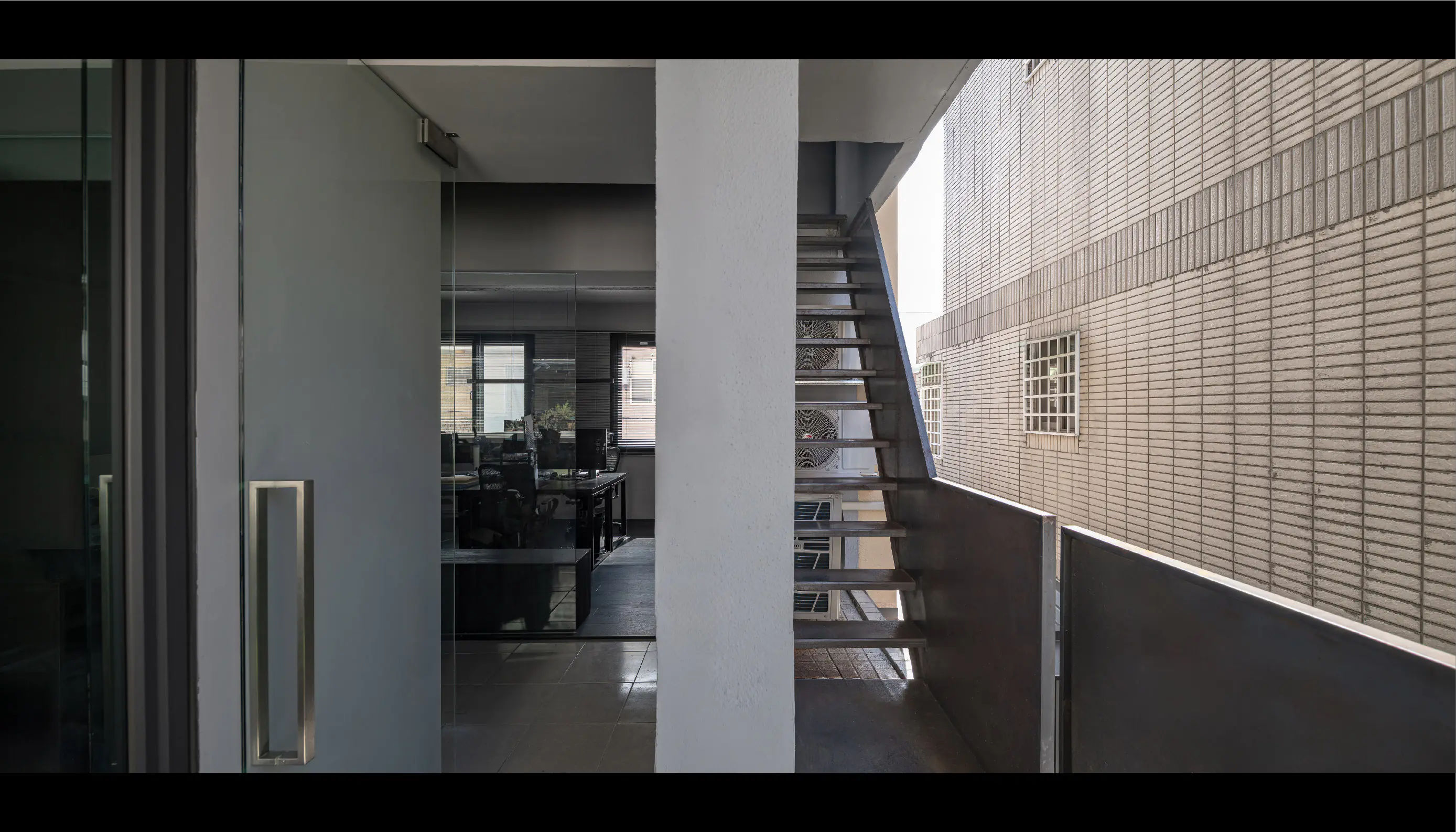
在二樓,部分原有室內空間被轉化為陽台,使自然光得以重新進入室內深處,同時也讓工作空間與戶外環境產生更直接的聯繫。在老屋既有架構之下,新的空間秩序逐漸形成,使工作、思考與自然之間建立起更安靜而內斂的關係。
Spatially, the design extends the path of entry into the building, forming a cloister-like circulation that unfolds along the courtyard. Moving from the brightness of the outdoor garden into a narrower passage, the transition of light and spatial scale gradually slows one’s pace, allowing the mind to settle. Existing structural walls are preserved as key spatial boundaries, shaping moments of light and shadow and creating a layered sequence along the path of movement.
Columns, shadows, and natural daylight together establish the spatial rhythm of the cloister, allowing views, circulation, and natural focal points to gradually reveal themselves while moving through the space. The looped circulation also strengthens the relationship between interior spaces and allows flexibility for future spatial expansion.
On the second floor, part of the original interior was opened up and transformed into a balcony, allowing daylight to re-enter the deeper parts of the building while creating a closer connection between the workspace and the outdoor environment. Within the framework of the existing structure, a new spatial order emerges, where work, contemplation, and nature coexist in a quieter and more introspective atmosphere.
Starting from a place of respect for history, the original textures of the building were preserved cement flooring, terrazzo columns, and wooden façades subtly evoke the charm of the old house. Inside, the same honest language continues: a concrete base and interlaced red bricks reveal the passage of time, while long tables and linear lighting create a layered dining experience, much like developing images in a darkroom. The atrium and reflecting pool bring in natural light and shadow, allowing the space to shift with time and fostering a quiet dialogue between people and nature. In the backyard, ecological considerations guided the redesign ground surfaces and drainage systems were restored, greenery was introduced, and open circulation was created. The result is a space that not only honors its past, but also embraces coexistence with the city and its community.